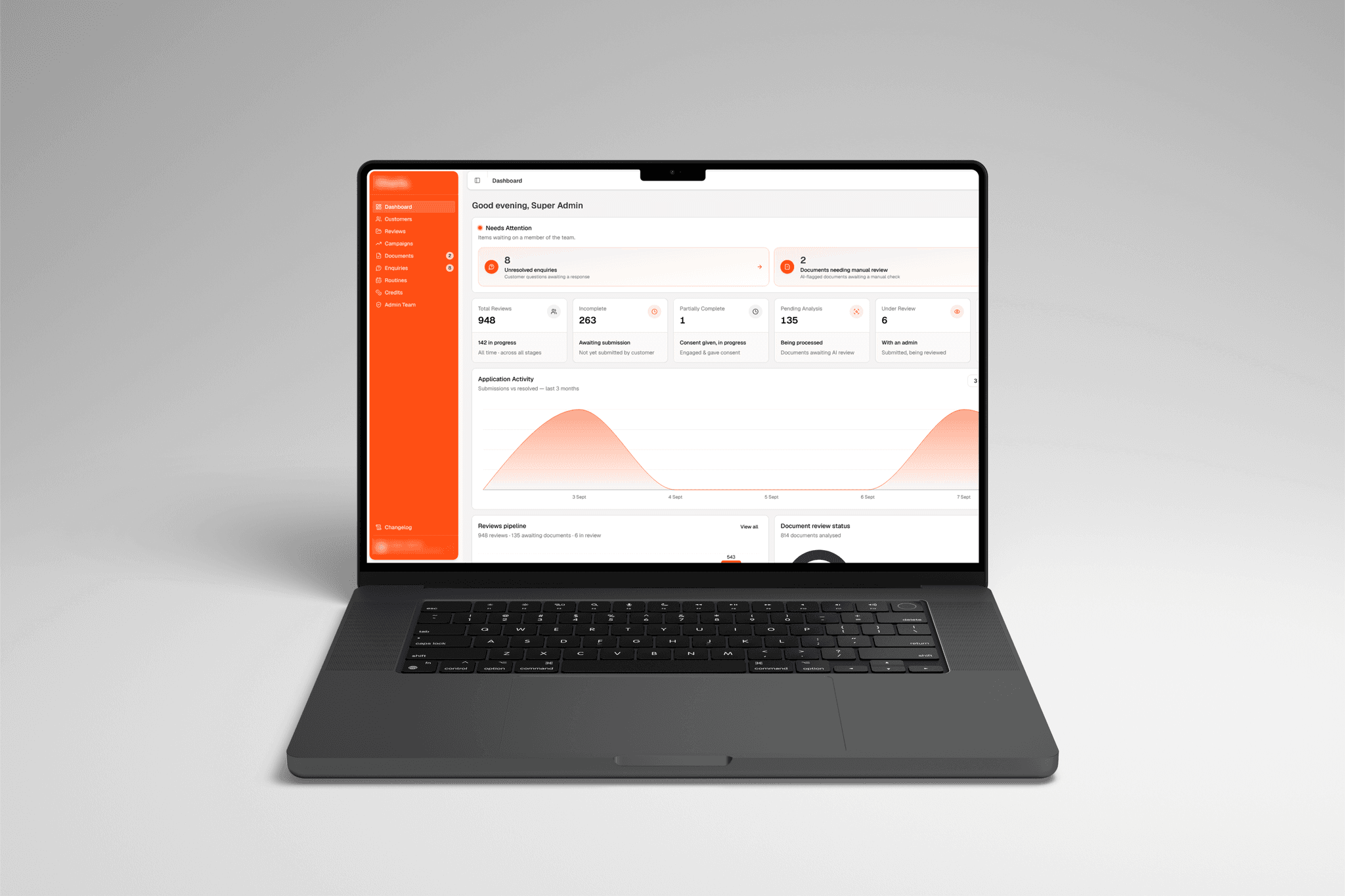
Thousands of reviews. A team moving every one by hand.
The organisation needed to process reviews at a scale where the existing operation was becoming the bottleneck. Staff were calling people one by one, asking the required questions, recording answers, chasing anyone who didn't respond, following up on incomplete applications, collecting supporting evidence, checking documents, and updating records as each case moved forward. The work didn't stop after the call. An unanswered phone meant another attempt. An incomplete review meant follow-up. Missing evidence meant another message. New documents had to be checked. Application statuses had to be updated. Questions had to reach the right person. Multiply that by thousands of reviews and the operation becomes mostly coordination. The existing portal could hold the information. What it couldn't do was move the work forward on its own.
The operation now brings the work to the team. The biggest change wasn't that an AI agent could make a phone call. It was what no longer had to happen around that call. Staff no longer need to work through lists of people one by one just to start a review. They don't need to manually turn every conversation into application data, maintain callback lists, chase every incomplete case, repeatedly check whether evidence has arrived, or assemble information across disconnected steps before they can act. The platform keeps that work moving. Outreach begins automatically. Conversations become structured records. Non-responders move into follow-up. Applicants complete missing information through their own portal. Evidence is collected and pre-checked. Application states advance as requirements are satisfied. By the time staff need to intervene, much of the coordination required to get the case there has already happened. The portal used to be where people entered the work. Now it's where completed work arrives.